
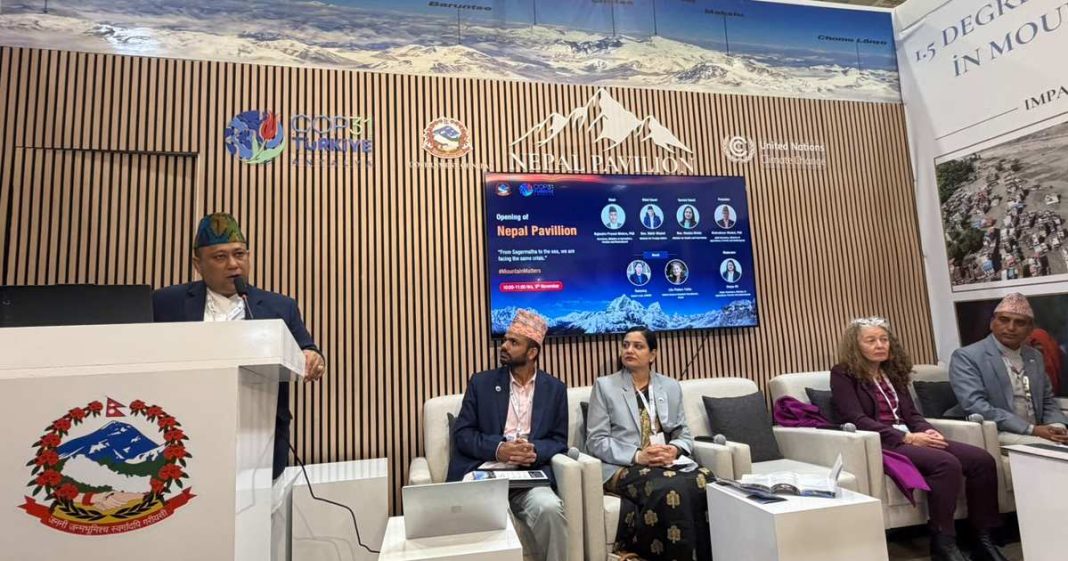

As the 31st Conference of the Parties (COP-31) to the United Nations Framework Convention on Climate Change convened in Antalya on Monday, Nepal wasted no time in placing the fragility of the Himalayan ecosystem at the center of the global climate conversation.
Foreign Minister Shishir Khanal inaugurated the Nepal Pavilion, a platform designed to showcase the country’s climate ambitions, biodiversity conservation achievements, and community-level adaptation efforts to the international community. But the message from the inauguration stage was less a celebration of achievement than an urgent appeal for climate justice.
Addressing the ceremony, Khanal drew the attention of the international community to the climate-induced risks and challenges faced by the sensitive Himalayan ecosystem, expressing deep concern over the changes observed in snow, glaciers, and frozen water systems across the region.
Describing the recent destructive Bhotekoshi disaster caused by climate change as a “Himalayan tsunami,” Khanal noted that countries at the forefront of climate change, like Nepal, are bearing disproportionately large risks and losses. He emphasized the need for international partnership and cooperation to ensure climate justice, establish easy access for affected nations to the loss and damage fund, and enhance the resilience of the Himalayan region.
Global cooperation, he added, is indispensable not only for the conservation of the Himalayan region but also for the security of communities living in downstream areas. Health and Food Security Minister Nisha Mehta and House of Representatives member Sagar Dhakal also addressed the inauguration ceremony alongside other distinguished representatives.
A Global Stage Echoes Nepal’s Plight
Nepal’s message found a powerful echo from the top of the COP-31 agenda. COP-31 President and Brazilian diplomat Andre Aranha Correa do Lago highlighted Nepal as one of the countries severely affected by climate change during an address on Kartik 23, 2083. Speaking at the opening event in Antalya, he stated that the world must always remember the suffering of people in Nepal, Brazil’s Rio Grande do Sul, and various other regions impacted by climate change.
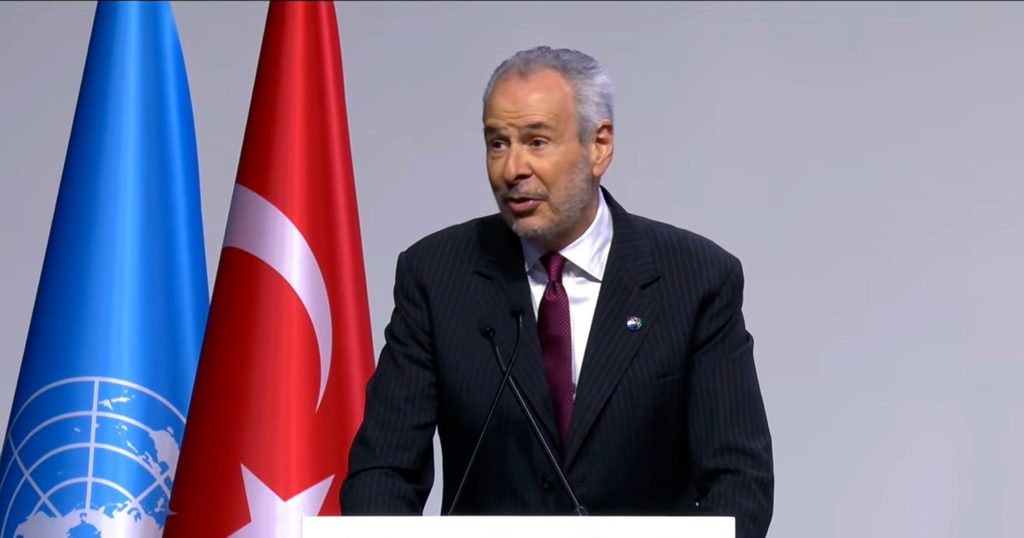
Lago emphasized that climate action and decisions must be strictly based on science while prioritizing the protection of the most vulnerable communities. He noted that climate policies directly connect to human life and development, stressing that transition processes must not worsen existing inequalities and must improve people’s living standards.
He called for strengthening adaptation programs to mitigate climate impacts so that vulnerable populations can directly experience the benefits. Active participation from governments, the private sector, local bodies, scientists, civil society, youth, indigenous communities, and women is essential for this campaign, according to him.
Lago pointed out that since the Paris Agreement, projected global temperature increases have dropped from above 4 degrees Celsius to approximately 2.7 degrees Celsius, though substantial work remains. He stated that the suffering and loss experienced by people in countries like Nepal must never be forgotten and that efforts must center on those most at risk.
From Pledges to Practice
COP-31 is taking place in Antalya, Turkey, from November 9 to 20, focusing on implementing climate commitments in practice, enhancing adaptation capacity, and protecting vulnerable communities.
For Nepal, the conference represents a critical opportunity to translate the recognition voiced by the COP president into tangible support. With the Bhotekoshi disaster fresh in mind and the Himalayan cryosphere changing at an alarming pace, Nepali officials are pressing for operationalized loss and damage funding and stronger international partnership—not as charity, but as a matter of climate justice.
As the world’s climate negotiators settle into two weeks of deliberations, Nepal’s pavilion stands as both a showcase of community resilience and a reminder that the mountains—and the billions downstream who depend on them—cannot wait.