
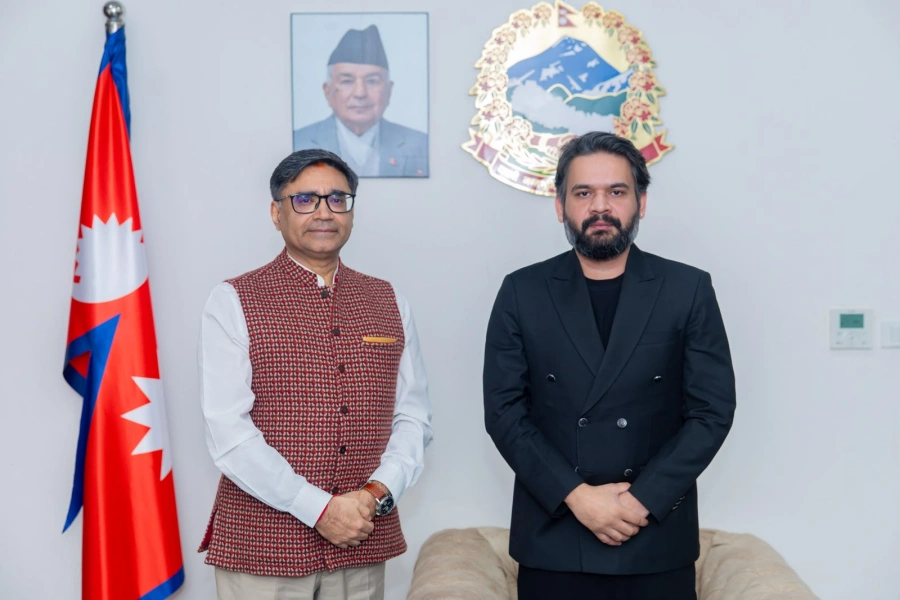

The invitations have been exchanged, the dates are nearly set, and the agenda, if still a work in progress, is coming into sharper focus. When Prime Minister Balendra Shah boards his flight to New Delhi later this month, he will do so at the head of a delegation deliberately kept lean — fewer than fifteen members, with private-sector representatives under consideration — and armed with a message that Kathmandu and New Delhi are ready to prioritise economic partnership over entrenched disputes.
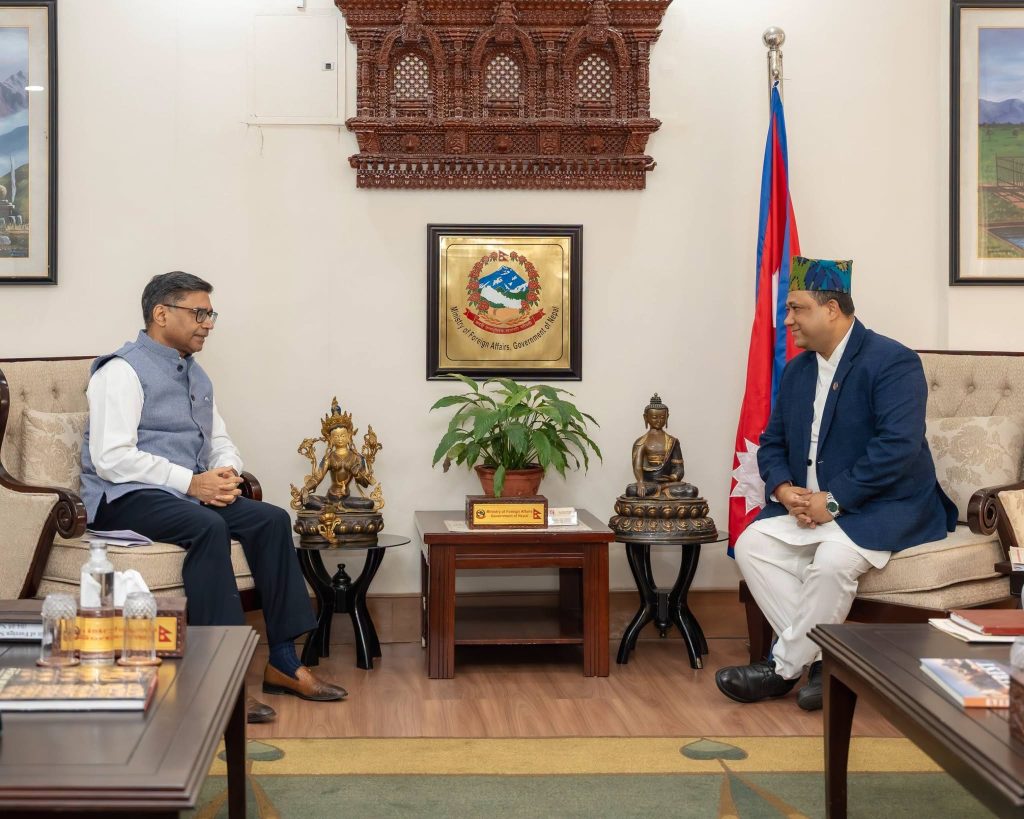
That much became clear during Indian Foreign Secretary Vikram Misri’s two-day visit to Kathmandu this week, a mission that served as both a rehearsal and a reset for Nepal-India relations. Misri returned to New Delhi on Thursday afternoon, having met Prime Minister Shah, Finance Minister Swarnim Wagle, Foreign Minister Shisir Khanal, Energy Minister Biraj Bhakta Shrestha, Infrastructure Development Minister Sunil Lamsal, the Nepal-India Parliamentary Friendship Group and the Parliamentary Committee on International Relations and Tourism.
According to a joint press statement, the Indian Foreign Secretary highlighted wide-ranging engagement and overall progress across diverse areas of bilateral cooperation while discussing possible outcomes and initiatives ahead of Shah’s visit. A close reading of the two-day dialogue reveals a clear convergence: both sides will focus on economic and development partnerships, while long-standing disputed matters — the border row, the Eminent Persons Group report and issues relating to the 1950 Peace and Friendship Treaty — will not be prioritized. The Indian side, officials indicate, is not interested in discussing them.
Shah is scheduled to visit India from November 23 to 25, with preparations being expedited on both sides. The three-day visit is expected to focus on strengthening bilateral ties and identifying priority areas for cooperation. “The dates have been almost finalized, although the agenda is still being worked out,” a senior Foreign Ministry official said. Shah is expected to travel directly to New Delhi, with no program planned outside the Indian capital.
A meeting between Shah and Modi is being planned for November 24, though it could be pushed to the following day if scheduling constraints arise. Nepal’s Acting Ambassador to India, Surendra Thapa, has arrived in Kathmandu to coordinate preparations, holding consultations with Foreign Ministry officials and other relevant agencies. “Preparations are underway. Not everything has been finalized yet. We are working to conclude the remaining arrangements,” said Foreign Ministry Spokesperson Lok Bahadur Chhetri.
The visit will be Shah’s first major bilateral engagement with a neighboring country as prime minister, following his trip to the United States for the United Nations General Assembly, where he raised climate justice and Nepal’s interests on the international stage.
During the delegation-level talks between Foreign Secretary Amrit Bahadur Rai and Misri, the two sides reviewed ongoing cooperation and discussed ways to strengthen the partnership. They expressed satisfaction with expanding cooperation in trade, development partnership, hydropower, physical connectivity, border management, energy and people-to-people relations, and identified emerging areas for collaboration — start-ups, digital connectivity, artificial intelligence and sports.
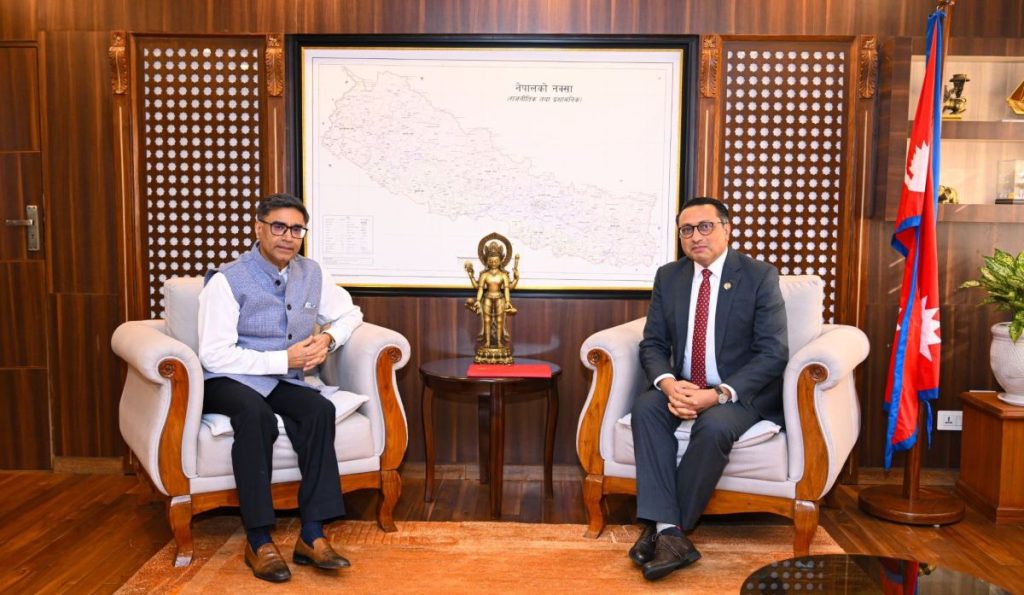
The floods of Bhotekoshi and Budhi Gandaki loomed large. Misri affirmed that India stands ready to support reconstruction and recovery, saying at a bilateral meeting with Rai: “We understand that there has been significant damage and destruction to infrastructure in Nepal. As always, India is ready to consider proposals for assistance or projects required during the reconstruction and rehabilitation phase.” Nepal’s leadership expressed gratitude for India’s swift humanitarian and technical assistance, and Kathmandu is expected to seek a financial package that includes concessional loans and grants, with officials indicating that a significant announcement could come during the prime ministerial visit.
Energy featured prominently in Misri’s meeting with Minister Shrestha, where discussions covered energy trade, hydropower construction, disaster response and early warning systems. Shrestha urged India to help expand power trade, complete ongoing projects and increase private-sector investment; Misri responded that India is ready to cooperate.
Among the headline events being planned is the joint inauguration of the rail link between Ayodhya, the birthplace of Lord Ram, and Janakpur, the birthplace of Sita — a service expected to boost tourism in Janakpur. Misri informed Prime Minister Shah that a trial run on the route had already been conducted. According to sources, Nepal has proposed that the prime ministerial visit take place over three days, with bilateral meetings, the signing of MoUs and inaugural programmes clustered together, and the Ayodhya–Janakpur train service inauguration timed to coincide with the Monday departure schedule.
Yet for all the momentum, the preparations remain uneven. Officials acknowledge that while some agenda items are finalised, discussions continue across ministries on a range of sensitive files.
Nepal has previously extended four lines of credit from India with a total commitment of Rs 1.65 billion, including $75 million for post-earthquake reconstruction; because Nepal could not deliver the projects and 75 per cent of Indian goods could not be used, the line of credit went unused, with $80–85 million still unspent. Kathmandu is now expected to seek an extension and expansion of credit, though which projects would absorb the amount remains undecided. Similarly, while there has been discussion of requesting additional grant assistance, the projects and modalities are unsettled.
Nepal has requested Indian support for a six-lane expressway between Butwal–Pokhara and a highway from Pokhara to Muktinath near the Chinese border, with studies suggesting a 75-kilometre expressway with a tunnel could cut travel time from Sunauli to Pokhara by an hour and a half. Nepal is reportedly expecting grant assistance of up to $500 million for the project — though the detailed project report is being prepared with Asian Infrastructure Investment Bank funding, leaving officials in a dilemma over whether to seek Indian assistance.
The Raxaul–Kathmandu railway is another item Nepal wants to advance. Only the final location survey has been completed; the DPR has been agreed to by India but the work has not been done, and the government is preparing to request that India build the project on grant with a DPR. The Ministry of Physical Infrastructure, however, says concrete preparations are yet to be made.
On the Pancheshwar Multi-Purpose Project, Nepal favours moving ahead after agreeing to the DPR during the visit. But Indian officials have said that if the project is to be delayed, the government will need a broad political consensus within Nepal. The 6,480 MW project, part of the 1996 Mahakali Treaty, remains without a completed DPR after nearly three decades, with the two sides unable to agree on water sharing, costs and claims from the Lower Sharda Barrage. Nepal has proposed an investment ratio of 30 per cent to India’s 70 per cent, citing India’s irrigation and flood-control benefits; officials say Finance Minister Wagle favours delay despite some hesitation, while the Ministry of Energy opposes compromising on water sharing.
Management of Bhairahawa and Pokhara international airports, and the air routes that would make them viable, is also on the table. According to sources, an agreement on their operation is expected during the visit, and India has committed to flying to both airports from different Indian cities if an Indian company is given management responsibility — though officials say there has been no discussion within the Ministry of Tourism and the Civil Aviation Authority of Nepal about handing management to a private company.
Also expected to surface: India’s purchase of electricity from projects with Chinese involvement, Nepal’s access to 10 cusecs of water in Chandni Dodhara, and the Upper Karnali and Arun-4 projects.
A Stabilizing Trajectory
Misri’s itinerary was notable as much for what it omitted as for what it included. He did not meet leaders of other opposition parties; his political engagements were limited to Prime Minister Shah, ruling Rastriya Swatantra Party Chairman Rabi Lamichhane and Nepali Congress President Gagan Thapa, the main opposition leader.
That selectivity, combined with the joint statement’s emphasis on “possible outcomes and initiatives,” points to a deliberate effort by both capitals to stabilize the relationship under Shah’s administration. India, for its part, is eagerly looking forward to welcoming Shah, Misri told the prime minister, conveying greetings from Narendra Modi, who is also looking forward to receiving his Nepali counterpart. Shah, in response, said preparations for his visit were underway.
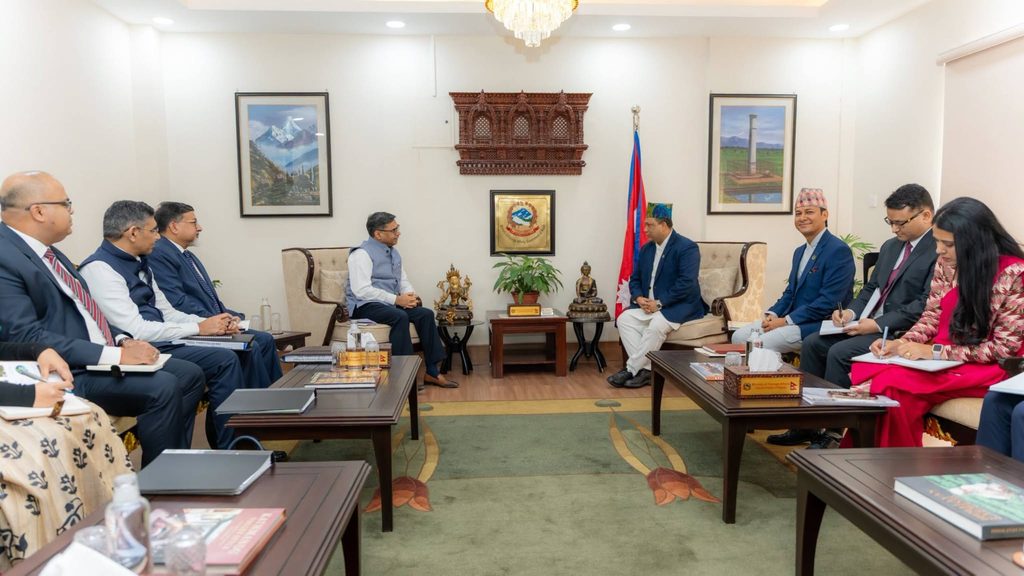
The challenge now is to convert choreography into achievement. Nepal will want concrete progress on market access, air routes, energy trade and large infrastructure, and will convey its desire to take the relationship forward on the basis of mutual respect, sovereign equality and mutual benefit. India will want a development partnership that builds trust with Nepal’s new political leadership.
If the groundwork laid this week holds, the last week of November may mark not just a prime ministerial first, but the beginning of a more settled chapter in a relationship that has long alternated between warmth and wariness.