
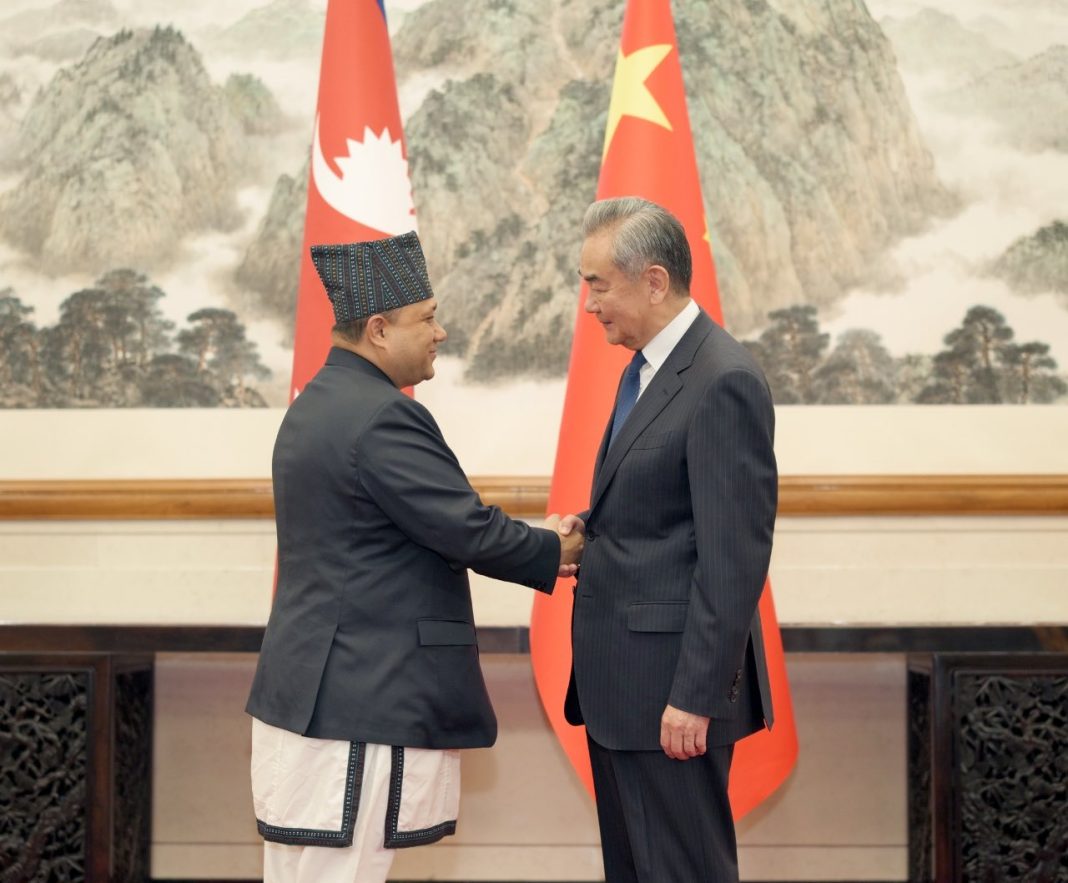

For the first time since the formation of the new government led by the Rastriya Swatantra Party (RSP), Nepal and China have convened bilateral talks at the foreign minister level. Nepali Foreign Minister Shisir Khanal’s four-day visit to Beijing marks a critical juncture in Himalayan diplomacy, occurring against a backdrop of shifting regional geopolitics and Beijing’s heightened strategic sensitivities.
The talks, characterized by extensive dialogues on security, economic pragmatism, and party-to-party cooperation, underscore Kathmandu’s delicate balancing act. As Nepal seeks to accelerate its domestic economic transformation, it must simultaneously navigate China’s core security anxieties and maintain equilibrium with its other vital neighbors and partners.
The timing of Foreign Minister Khanal’s visit—following his recent diplomatic engagement in India and a series of high-level visits from the United States to Kathmandu—was closely scrutinized by Beijing. Following last year’s GenZ movement, Chinese policymakers have remained skeptical regarding their security and strategic interests in Nepal, particularly concerning the expanding footprint of Western initiatives.
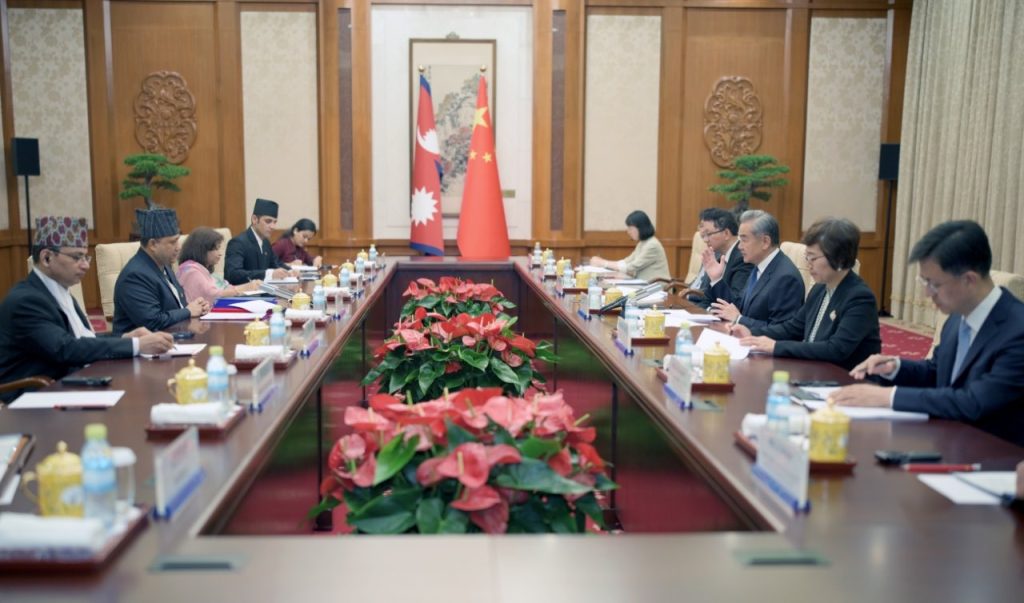
During nearly three and a half hours of discussions with his Chinese counterpart, Wang Yi, security and strategic assurances dominated the agenda. Beijing sought firm commitments regarding its core interests, specifically expressing explicit concerns over US-backed initiatives such as the Millennium Challenge Corporation (MCC) and the State Partnership Program (SPP).
In response, Minister Khanal firmly reiterated Nepal’s long-standing diplomatic doctrines. He assured the Chinese side that issues pertaining to Taiwan and Xizang (Tibet) are strictly China’s internal affairs. Reaffirming Nepal’s adherence to the One-China policy, Khanal pledged support for China’s complete reunification and guaranteed that Nepali territory would never be permitted for activities aimed at undermining Chinese interests.
The security dialogue also touched upon regional friction. Khanal registered Nepal’s disagreement regarding the recent Indo-Chinese arrangement concerning the movement of pilgrims and trade through Lipulekh. However, Wang Yi characterized the dispute as a bilateral border matter between Nepal and India, advising that it be resolved through direct diplomatic dialogue between the two South Asian neighbors.
Economic Pragmatism and the Connectivity Imperative
While security formed the bedrock of China’s agenda, economic cooperation and infrastructure connectivity remain the primary drivers for Kathmandu. In an interview with the Global Times, Khanal emphasized that Nepal’s current national priority is accelerated economic growth, with connectivity, infrastructure, and science and technology identified as the pillars of bilateral cooperation.
Transforming Nepal from a landlocked nation into a land-linked hub is a longstanding developmental aspiration. To this end, both sides discussed advancing the Trans-Himalayan Multi-Dimensional Connectivity Network. Khanal revealed that the Nepali government has approved a reply letter to advance the Chilime-Kerung cross-border transmission line project. Chinese technical teams are slated to conduct comprehensive ground feasibility surveys to determine the route and construction plans, though a definitive timeline remains pending due to the challenging mountainous terrain.
Furthermore, a feasibility study for the flagship cross-border railway project, conducted by the Chinese side, is expected to be submitted by the end of June. Subsequent phases, including border facilities and freight corridors, will be predicated on this report. Khanal noted that these projects are vital not only for rectifying the trade imbalance and expanding the export of Nepali specialty goods but also for fostering deeper people-to-people exchanges.
Navigating the BRI and Investment Hurdles
Despite the expansive dialogue, the Belt and Road Initiative (BRI) yielded no tangible breakthroughs. Although a framework agreement identifying 10 priority projects was signed last year, detailed discussions on these specific initiatives were limited during the visit. The RSP-led government has maintained a notably quiet official stance on the BRI. Historically, Nepal’s traditional political parties have communicated a strong preference for grant-based investments over loans, a sentiment that continues to influence the pacing of BRI projects.
Beyond macro-level frameworks, the talks addressed micro-level operational friction. The Chinese side advocated for a more equitable business environment, citing persistent regulatory and bureaucratic roadblocks faced by Chinese investors. Additionally, Beijing raised the ongoing corruption investigation surrounding the Pokhara International Airport—a project built with Chinese loan and grant assistance—in which a Chinese company is implicated alongside Nepali officials.
Emphasizing the importance of implementation, Beijing heavily stressed the execution of the wide-ranging agreements signed during President Xi Jinping’s historic 2019 visit, which originally elevated the bilateral relationship to a Comprehensive Strategic Partnership. In Chinese diplomatic practice, the execution of agreements signed by top leadership remains a paramount priority.
Party-to-Party Diplomacy and Governance Exchange
Recognizing the shifting political landscape in Kathmandu, Beijing also engaged in robust party-to-party diplomacy. Khanal held strategic meetings with Liu Haixing, Minister of the International Department of the Central Committee of the Communist Party of China (CPC), and Wang Huning, Chairman of the National Committee of the Chinese People’s Political Consultative Conference and a member of the CPC’s Standing Committee.
The CPC expressed a strong willingness to consolidate ties with the RSP, proposing the utilization of a “Party+” channel to promote cross-field cooperation and enhance political mutual trust. In turn, Khanal articulated the RSP’s eagerness to learn from the CPC’s extensive experience in party-building and state governance.
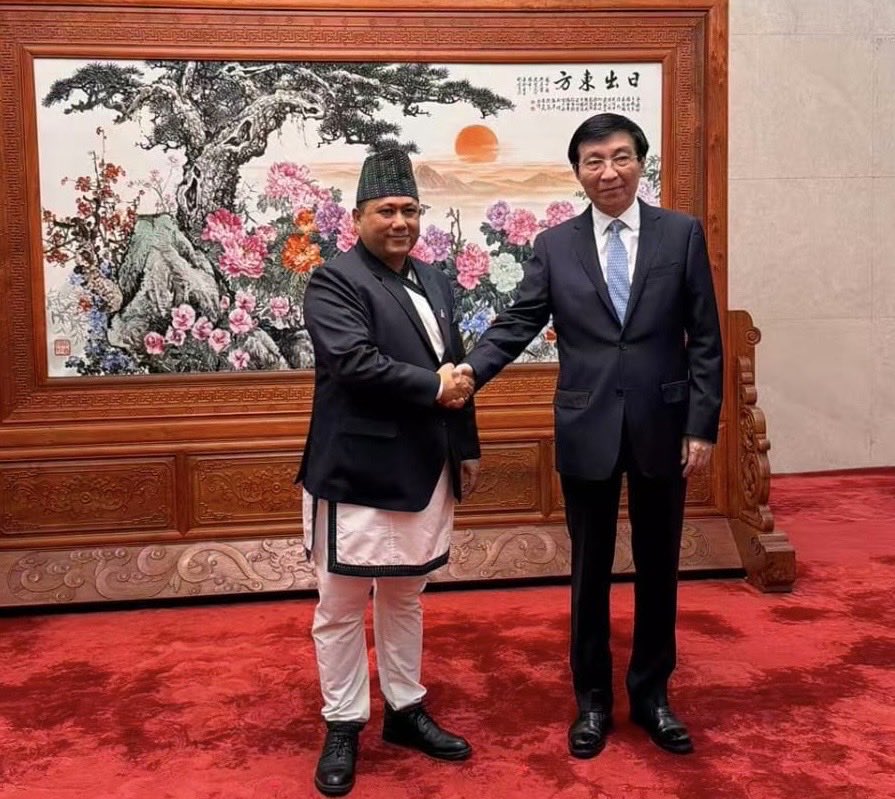
Coinciding with the 105th anniversary of the founding of the CPC, Khanal congratulated China on the successful launch of its 15th Five-Year Plan. He expressed profound admiration for China’s rapid economic ascent and its success in lifting nearly a billion citizens out of poverty. Aligning this with Nepal’s own vision of becoming a respectable middle-income country within the next decade, Khanal highlighted the inspirational value of China’s developmental model.
Conclusion
Foreign Minister Shisir Khanal’s visit to Beijing successfully navigated a complex matrix of security assurances, economic aspirations, and political diplomacy. By reaffirming the One-China policy and emphasizing balanced relations with both Beijing and New Delhi, the RSP-led government has sought to stabilize the geopolitical environment.
Moving forward, the trajectory of Nepal-China relations will likely be defined by the pragmatic execution of connectivity projects and the careful management of investment modalities. As Nepal strives to leverage its geographic position for economic transformation, its ability to balance Chinese strategic expectations with its own developmental imperatives will remain the defining feature of its foreign policy.