
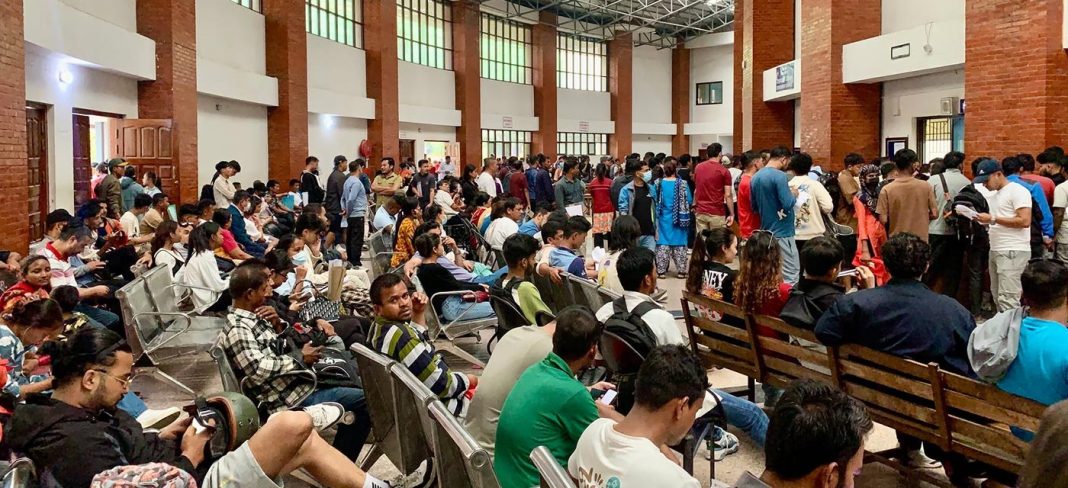

Marking the largest digital overhaul of its kind in the nation’s history, Nepal’s Ministry of Foreign Affairs has officially switched on its new passport production and administration system. The monumental data migration—involving the records of nearly 10 million Nepali citizens—has been completed, ushering in an era of what officials promise will be more modern, secure, and efficient service delivery.
But as with any digital dawn, the first rays of light come with shadows. The Department has cautioned that the transition to this massive information technology framework will not be entirely seamless. In the initial days, citizens may encounter technical glitches, system sluggishness, and general delays in the distribution of allowances.
“Implementing a system of this scale is akin to rebuilding an airplane while it is still in flight,” a senior department official explained on condition of anonymity. “The sheer volume of data—the lifeblood of our citizens’ entitlements—has been moved, but the engines need fine-tuning.”
To combat the inevitable teething problems, the Department has mobilized a “digital fire brigade.” A combined task force comprising the department’s own IT personnel, dedicated civil servants, and experts from the system development company is now on 24-hour standby. This team is actively monitoring server loads, testing modules, and implementing patches in real-time to stabilize the platform.
“The cost of progress is always paid in the currency of patience,” the official added. “We are working around the clock to ensure that every byte of data translates into a rupee of rightful allowance for our citizens.”
Understanding the potential for bottlenecks, the Department has issued a strategic request to the public: for the time being, only those with urgent and pressing needs should file applications. This measure, they believe, will reduce the immediate strain on the new system, allowing the technical teams to stabilize the core infrastructure before the full weight of mass applications resumes.
This temporary measure is designed to prioritize the most vulnerable while the system finds its footing. The Department is confident that this phased approach will ultimately result in a more robust and reliable platform for all.
In a digital age rife with rumors, the Department has also drawn a firm line on information authenticity. Officials have urged the public to treat official communications from the Ministry of Foreign Affairs and the Passport Department as the sole authoritative source of information.
“There is a lot of noise out there,” the Department stated. “We ask citizens to trust only the news and reports published through our official channels. We will communicate every change, every fix, and every milestone directly.”
Despite the early hiccups, the tone from the Ministry remains resolutely optimistic. The Passport Department has reiterated its unwavering commitment to providing prompt, efficient, and reliable services to the Nepali people. The migration is viewed not as an endpoint, but as the foundation of a new, digitally empowered relationship between the state and its citizens.
“We thank our service customers for their trust, their patience, and their cooperation,” the Department concluded in its release. “This is a new beginning. We will get there together.”