
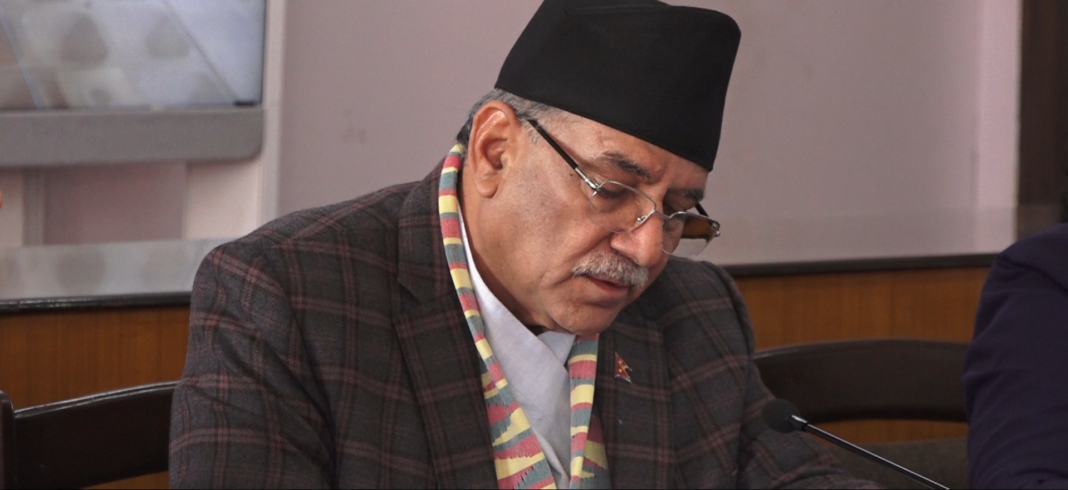

Prime Minister Prachanda has formed a new coalition government in Nepal, sparking discussions on the country’s foreign policy priorities and geopolitical challenges.
The coalition comprises four communist parties and one centrist party. They have established a task force to create a Common Minimum Program (CMP) that covers both domestic and foreign policy agendas.

Given Nepal’s strategic location and its relationships with key global players like India, China, and Western democracies, the coalition’s stance on foreign policy is crucial.
Historically, communist-led governments in Nepal have faced scrutiny from international actors, especially India and Western nations. Building trust with these countries is essential.
China, as a primary international actor, has expressed support for Nepal’s political stability and economic growth in response to the new coalition. However, other major players like the US, India, and the UK have yet to issue official statements.
The centrist Rastriya Swatantra Party’s position remains ambiguous, adding complexity to the coalition’s foreign policy decisions. As Nepal prepares for initiatives like investment summits, establishing trust with major powers will be paramount for the government’s success.

The recent reshuffling of key ministerial positions, particularly with the Maoist party now leading the Foreign and Finance Ministries, signals a potential shift in Nepal’s foreign policy priorities.
Prime Minister Prachanda aims to align both foreign policy and economic agendas by appointing Maoist ministers, although the specific details of these priorities are yet to be fully defined.
The coalition government’s approach to foreign policy is expected to mirror previous commitments outlined in the 2022 Common Minimum Program (CMP).
These commitments emphasize national independence, non-interference, and friendly relations with neighboring countries. However, reconciling differences between coalition partners, especially the Maoists and the UML, may present challenges in implementing a cohesive foreign policy agenda.
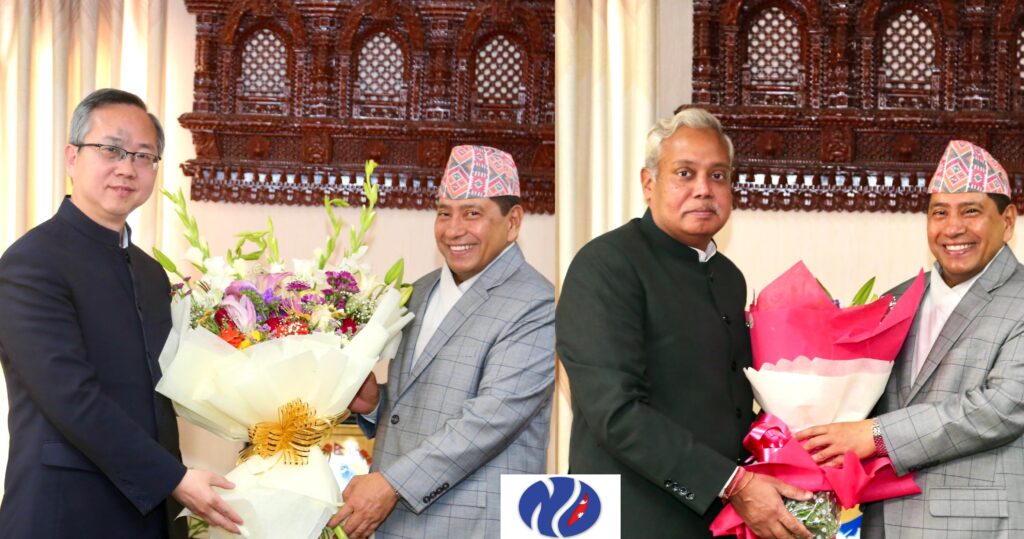
Nepal’s foreign policy, rooted in principles of non-alignment and international cooperation, plays a critical role in managing relationships with neighboring countries and major global powers.
Despite the geopolitical complexities, the coalition government will likely prioritize maintaining cordial relations with key partners while actively seeking opportunities for economic development and investment.
Given Nepal’s strategic importance, the new coalition’s foreign policy may emphasize continuity, focusing on nurturing friendly relations with immediate neighbors and key development partners such as the US, the UK, and China.