

Bidhur Dhakal
In March 2026, Nepal witnessed its most disruptive political transformation since becoming a republic. The Rastriya Swatantra Party (RSP), an anti-establishment force, a barely four-year-old party, swept the parliamentary elections, winning 182 of 275 seats. Balendra Shah (“Balen”), the 35-year-old former Kathmandu mayor and rapper, became prime minister on March 27. This youth-driven upheaval not only ended nearly two decades of dominance by the Nepali Congress and communist parties but also poses acute challenges to Nepal’s long-standing geopolitical balancing act – particularly regarding the sensitive issue of Tibetan refugee communities on its soil.
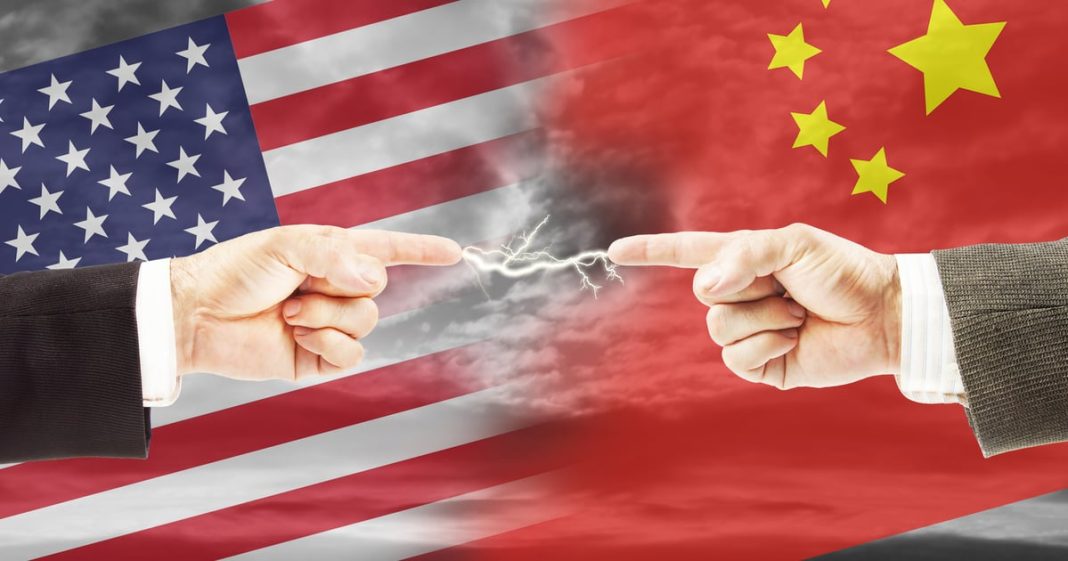
Nepal’s domestic handling of Tibetan exile groups, the intent behind U.S. funding for Tibetans and the “Countering PRC Influence Fund,” the strategic logic of American policy, and China’s deepening concerns have placed Nepal in a more vulnerable position of geopolitical rivalry. Recent political developments and accounts inside Nepal, including political earthquakes, operations of Tibetan Original Bloods (TOB), congratulatory messages to the Interim Prime Minister Sushila Karki from the Dalai Lama and to the New Government PM Balen from the Central Tibetan Administration (CTA)’s Sikyong Penpa Tsering, the US Congressional Report, and Consolidated Appropriations Act, 2026 have raised serious concern over so-called “Free-Tibet” activities in Nepal.
Tibetan Exile Communities in Nepal
For decades, Nepal has managed its Tibetan refugee population – estimated at tens of thousands, concentrated in the Boudha area of Kathmandu, and Western Nepal, Pokhara – through restrictions on their activities. Limiting these groups to religious and cultural activities, and curbing political activities, through serving its long-standing principle of “one China”. However, the massive youth-led protests of September 2025, which forced Prime Minister K.P. Sharma Oli to resign, disrupted this delicate equilibrium in two significant ways. During the September 2025 unrest, a group calling itself “Tibetan Original Blood” (TOB) – composed of Nepali citizens of Tibetan descent – appeared on the streets. Dressed in distinctive black jackets emblazoned with TOB logos and dragon motifs. This group has been involved in catalyzing the escalation of the violence during the protest. TOB’s leader, Tenzing Dawa, was arrested for allegedly destroying public property, but the group’s social media posts openly expressed support for “Free Tibet” narratives. The Nepal Army subsequently acknowledged it was “closely monitoring” external infiltration, including TOB’s activities. For Beijing, the sight of an organized Tibetan-ethnic group participating in violent street politics on Nepali soil was a major alarm bell.
After Balendra Shah’s swearing-in on March 27, 2026, the Central Tibetan Administration (the so-called “Tibetan government-in-exile” based in Dharamshala) issued a public congratulatory letter. Signed by Penpa Tsering, the message praised Shah’s rise as reflecting “the aspirations of Nepal’s younger generation” and highlighted the “centuries-old cultural and spiritual ties between Nepal and Tibet,” while expressing gratitude to the Nepali people and government for “hosting the Tibetan community.” The letter was widely circulated on social media. A separate media outlet focusing on “Tibetan Communities” reports the Dalai Lama’s congratulatory message to Balen has also been circulated.
Notably, the Dalai Lama had also sent a congratulatory note to interim Prime Minister Sushila Karki in September 2025. The CTA’s open letter to Shah – timed to exploit Nepal’s political transition – was seen by observers as an attempt to expand political space for Tibetan exile institutions at a moment of governmental flux in Kathmandu.
As of this time, the new RSP government has not publicly responded to the CTA’s congratulatory letter. Foreign Minister Shishir Khanal has expressed the government’s stand that “firmly adheres to the One-China policy” and “does not foresee any major foreign policy shift.” Further, during the meeting with the Chinese ambassador, Home Minister Sudan Gurung has also expressed these commitments. Despite of these commitments, the circulation of the CTA’s letter and the heightened political activity of Tibetan-ethnic groups have already eroded some of the traditional “firewalls” in Nepal’s Tibet policy. The letter itself is not the main issue – it’s the chain of events: a youth-driven political upheaval, allegations of external involvement, increased Tibetan community activism, and then an open letter from the exile leadership. Each link alone might be manageable, but together they form a different picture.”
The US Instrumentalization of Tibet to Counter the PRC
Besides the “Tibetan Activities, the Anti-China Activities”, the domestic political shifts have provided the ground for the U.S. strategic engagement with Tibetan Communities in Nepal. The US. funding for Tibetan exile communities has bipartisan roots reaching back decades. In July 2025, after a temporary freeze under “America First” policies, the Trump administration restored $6.8 million for “Tibetans in South Asia.” A State Department statement justified the move as “a decades‑old bipartisan commitment to support the dignity and human rights of Tibetans and help them preserve their unique religious, cultural, and linguistic identity.” Further, it has continued in 2026 too.
Most of these funds are channeled to refugee settlements in India, Nepal, and Bhutan, supporting health, education, and livelihoods for Tibetan exiles. In Nepal specifically, the money supports community services in Boudha and other Tibetan-majority areas. While presented as humanitarian aid, geopolitically, this funding serves as a low-intensity tool to keep the “Tibet issue” on the international agenda and to maintain leverage over Beijing. When the communities receiving such support become politically active during a national crisis, Washington gains indirect influence over Nepal’s internal calculus.
Far more consequential is the Countering PRC Influence Fund, authorized in the FY2026 Consolidated Appropriations Act of the US. The act appropriates no less than $400 million for a “Countering PRC Influence Fund” to “counter the influence of the Government of the People’s Republic of China and the Chinese Communist Party and entities acting on their behalf globally.” The funds can be drawn from multiple accounts – National Security Investment Programs, International Narcotics Control and Law Enforcement, Nonproliferation, and Foreign Military Financing – and may be transferred between accounts.
The geographic scope is global, but Southeast and South Asia, including Nepal, are priority regions. The fund can support “grants, cooperative agreements, contracts, and other arrangements” with media outlets, civil society organizations, and academic institutions. In Nepal’s context, this could translate into financing for NGOs, journalists, or even Tibetan-ethnic organizations to amplify narratives critical of China’s Tibet policies, promote “Free Tibet” messaging, or otherwise undermine Chinese influence. The Act, under the heading “National Security Investment Programs,” has appropriated funds of 10 million USD to non-governmental organizations with experience working with Tibetan Communities in China. Further, under the same program, an additional 8 million US was appropriated for Nepal and India, engaging in a program to “promote and preserve Tibetan Culture, Language, in the refugees and diaspora Tibetan communities.” This fund is focused on creating “resilience of Tibetan Communities and CTA in India and Nepal to develop “next generation leaders.”
Of the fund, an appropriate amount, not less than 5 million USD, is directly made available to strengthen CTA, and 1.5 million USD to address economic growth and capacity building of the Tibetan Communities in Nepal and India. Such Tibet funding and the Countering PRC Influence Fund are not merely additive; they form a strategic nesting. The former provides basic survival support for Tibetan exile communities; the latter offers them platforms, resources, and political voice. Together, they create a continuum from low-intensity humanitarian assistance to high-intensity ideological contestation.
China’s Deep-seated Concerns
The political realignments in Nepal and the US strategic funding have raised the concern of the China. Which the official from the new government, including the Foreign Minister and the Home Minister, has clarified Nepal’s commitments on the “One China Principle”. The concern is still prevailing.
Nepal, bordering China’s Tibet Autonomous Region, is a critical component of its western security architecture. For two decades, successive Nepali governments – whether from the Nepali Congress or communist parties – effectively cooperated with Beijing in controlling cross-border movements of Tibetan exiles and limiting their political activities. The public CTA’s congratulations to the RSP government, combined with TOB’s street-level activism and continuity of the US strategic funding, have threatened Nepal’s long-standing policy.
The combination of the US Tibet funding and the Countering PRC Influence Fund is the strategic engagement of the US in China’s periphery. The engagements of diplomats and officials from Western countries with Tibetan Communities in Nepal have increased in recent years, too. Despite engagements of TOB in violent protests, the investigation committee has sought to clear their motive. This has become a concern among the Beijing Circle. From Beijing’s perspective, the prospect of U.S.-backed Tibetan groups operating openly in Nepal represents a direct challenge to its core interests on its Western Security Architect.
To conclude, the RSP is a young, ideologically unmoored party that came to power on an anti-corruption, anti-establishment platform. Its foreign policy concept of “development diplomacy” – prioritizing economic gains without political conditionality – is deliberately vague. While this may be intended to avoid great-power entrapment, it also means the government lacks a tested foreign policy apparatus and a clear ideological compass. For China, a government that rose on youth discontent and has yet to clearly reaffirm its position on previously signed agreements, including the BRI.
The RSP has signaled it will continue to respect the One-China policy and non-alignment. It also seeks a “dynamic bridge” role between China, India, and the United States. In Tibet, the most probable outcome is: public statements reaffirming One-China, but greater tolerance for Tibetan cultural and even low-level political activities on the ground, especially if U.S. funding enables them. This may be interpreted by Beijing as “tacit acceptance,” which may develop the distrust between Nepal and China. That may further slowdown the progress of Chinese projects in Nepal. The Escalation of U.S.-funded activism (Tibet Funding and Countering PRC Influence Fund) will further create the risk of “anti-Chinese” activities in Nepal. Thay will hamper the friendly relations with China. This would put the new government in a painful dilemma—clamp down and alienate youth supporters who sympathize with the groups, or tolerate the activity and antagonize China, and may produce unintended consequences.
The Author is PhD Candidate at East China Normal University, China