
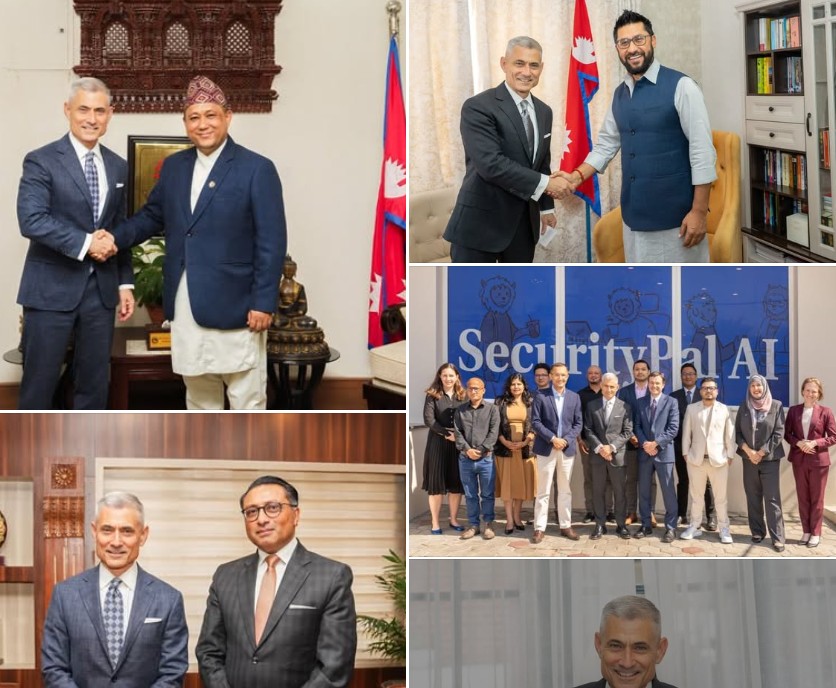

When U.S. Assistant Secretary of State for South and Central Asian Affairs Paul Kapur touched down in Kathmandu last on Monday, the optics of his visit were as telling as the agenda. Over two days, he met with key ministers and a opposition party chairman — but notably, not with Prime Minister Balendra Shah.
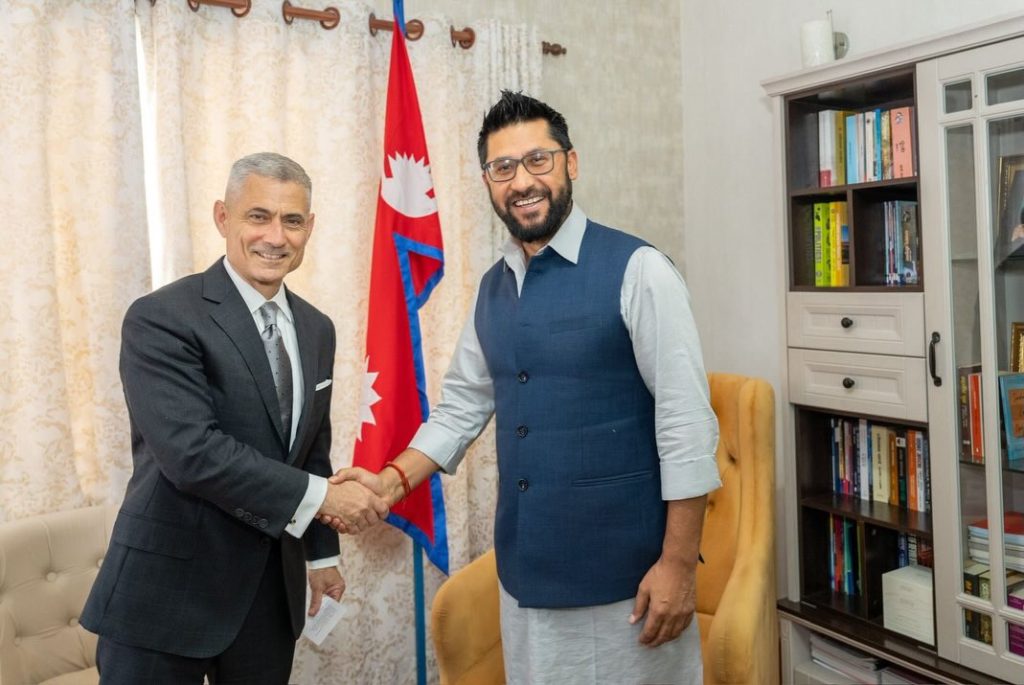
The omission, while officially unremarked upon, underscores a quiet recalibration in one of South Asia’s most sensitive diplomatic relationships. For decades, senior U.S. officials visiting Nepal have made it standard practice to meet both the President and the Prime Minister. Kapur’s itinerary suggests Washington is taking a wait-and-see approach toward Shah’s new Rastriya Swatantra Party-led government — even as it signals openness to a deeper economic partnership.
A New Language: Investment, Not Aid
Kapur’s message to Nepali authorities was consistent and deliberate: the United States is ready to encourage more direct investment—but Kathmandu must first create a conducive environment.
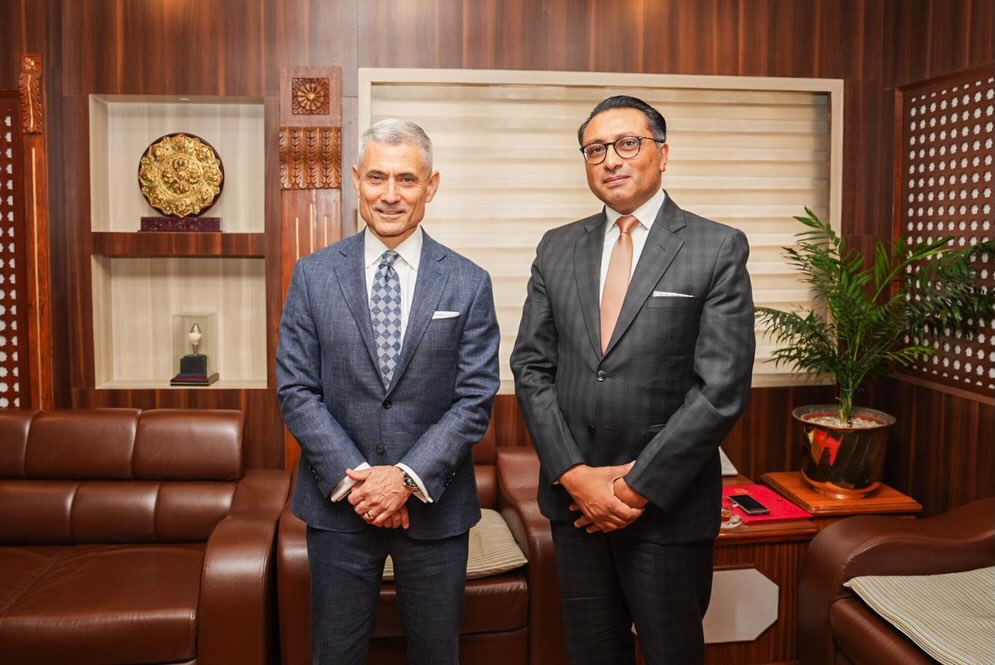
In separate meetings with Finance Minister Swarnim Wagle and Foreign Minister Shisir Khanal, the visiting diplomat heard a chorus of requests for U.S. capital. Both ministers emphasized that foreign investment would be instrumental in job creation and economic acceleration — a pressing need for a country whose average annual growth has not crossed five percent in three decades.
“If an investment climate is created, there will definitely be more investment coming to Nepal,” Kapur told his hosts, according to an official privy to the discussions.
The shift in tone is noteworthy. Neither minister sought development assistance. Instead, the conversations revolved around trade, tax regimes, legal reforms, and sector-specific opportunities in transportation, energy, and digital infrastructure.

The Cotiviti Shadow
Behind the diplomatic pleasantries, however, loomed unresolved commercial disputes. Kapur raised the tax issues of Cotiviti, a U.S.-based information technology company, alongside those of Coca-Cola and Dolma Impact Fund.
In March 2024, Nepal’s Department of Revenue Investigation filed a staggering Rs10.36 billion claim against Cotiviti for alleged revenue fraud — Rs5.18 billion in evaded taxes plus an equal penalty. Similarly, Bottlers Nepal faces a Rs3.71 billion tax evasion case. Meanwhile, the previous government’s tax exemption to Dolma Impact Fund — which invested through a Mauritius-registered “shell company” — remains a sore point.
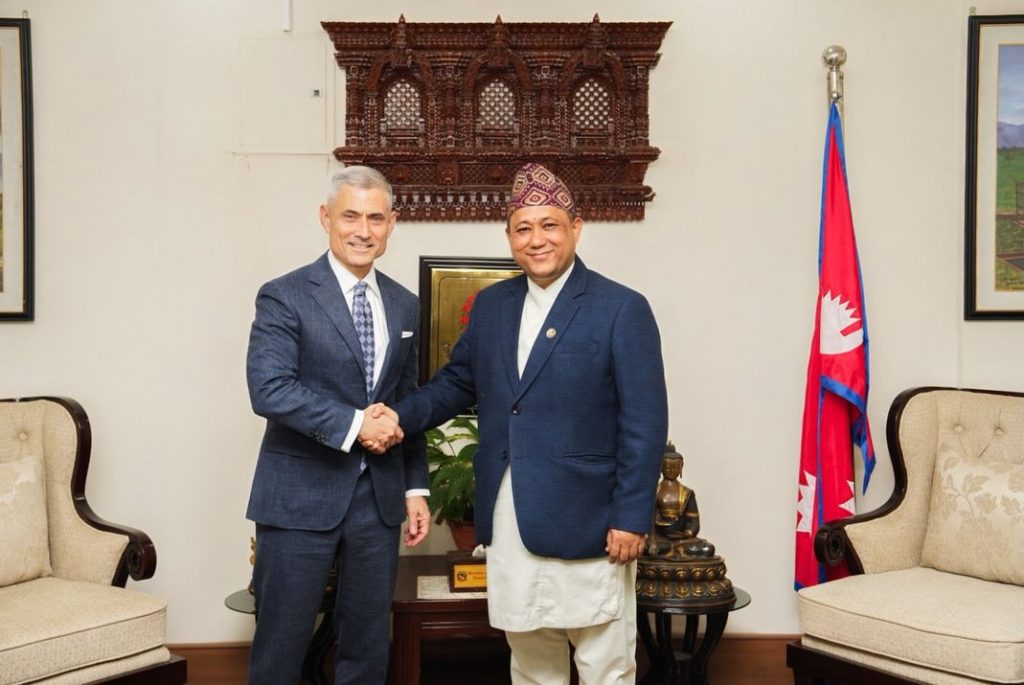
Finance Minister Wagle assured Kapur that Nepal would settle these issues through legal procedures, pledging to repeal outdated laws and introduce new legislation to clear administrative hurdles.
The Tibetan Dimension
Perhaps the most delicate moment of Kapur’s visit came not in a government ministry, but at the Bouddhanath Stupa, where he met with Tibetans living in exile in Kathmandu.
While appreciating Nepal’s humanitarian support for Tibetan refugees, Kapur urged Kathmandu to issue identity cards to bring them under the tax net, noting difficulties the community faces in opening bank accounts, doing business, and accessing nursing education.
The timing was sensitive. Just a week earlier, Chinese Ambassador Zhang Maoming had cautioned Home Minister Sudan Gurung over “Tibetan and Taiwanese activities” in Nepal, pressing Kathmandu not to become a platform for interests hostile to Beijing.
Foreign Minister Khanal acknowledged the sensitivity. “The Tibetan refugee issue concerns our northern neighbor, China,” he told Kapur. “We are hosting them on humanitarian grounds and will continue to do so.”
A Government in Reset Mode
The visits come as Prime Minister Shah resets Nepal’s diplomatic posture. Having taken office after March elections, his government has signaled a shift toward economic reform, good governance, and quality infrastructure — priorities that Kapur noted are being “closely and positively observed” by the Trump administration.
Kapur also met with Rabi Lamichhane, Chairman of the Rastriya Swatantra Party, to understand the party’s priorities in government. The U.S. official’s engagement with the opposition — while bypassing the Prime Minister — suggests Washington is building multiple channels of communication.
In meetings with the American Chamber of Commerce in Nepal, Kapur highlighted opportunities to expand U.S. business involvement in the ICT sector, including digital infrastructure, AI adoption, and cybersecurity — areas where American technological expertise could prove transformative.
What Lies Ahead
For Nepal, the calculus is becoming clearer. With traditional development assistance models evolving, the Shah government is betting that direct investment from the United States can help transform the country into a middle-income nation within a decade.
For Washington, Nepal represents not just a long-standing partner, but a strategic geography — one where economic engagement offers an alternative to zero-sum great power competition.
Whether Kapur’s next visit includes a meeting with the Prime Minister may well depend on how quickly Kathmandu can translate its assurances into action: clear legal frameworks, resolved tax disputes, and a genuinely investment-friendly climate.
As Kapur wrote on X following his meeting with Finance Minister Wagle: “Closer business ties will boost Nepal’s transportation, energy, and digital infrastructure, bringing economic growth that benefits both of our countries.”
The words were diplomatic. The message was transactional. And in Kathmandu’s rapidly evolving diplomatic landscape, that may be exactly the kind of relationship both sides are now ready to build.