

Dr. Sadikhsya Khanal
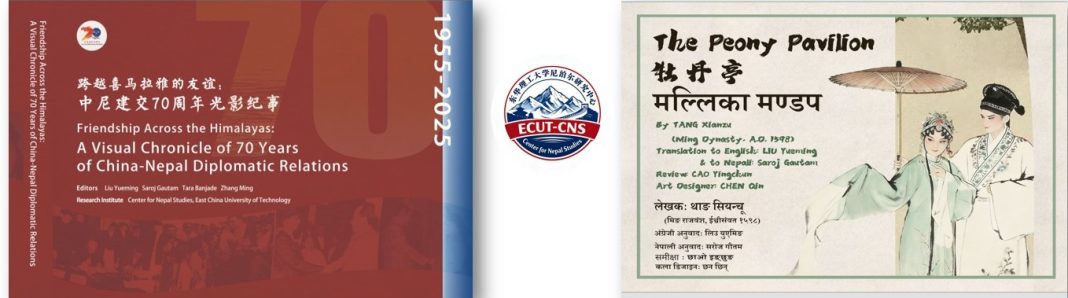
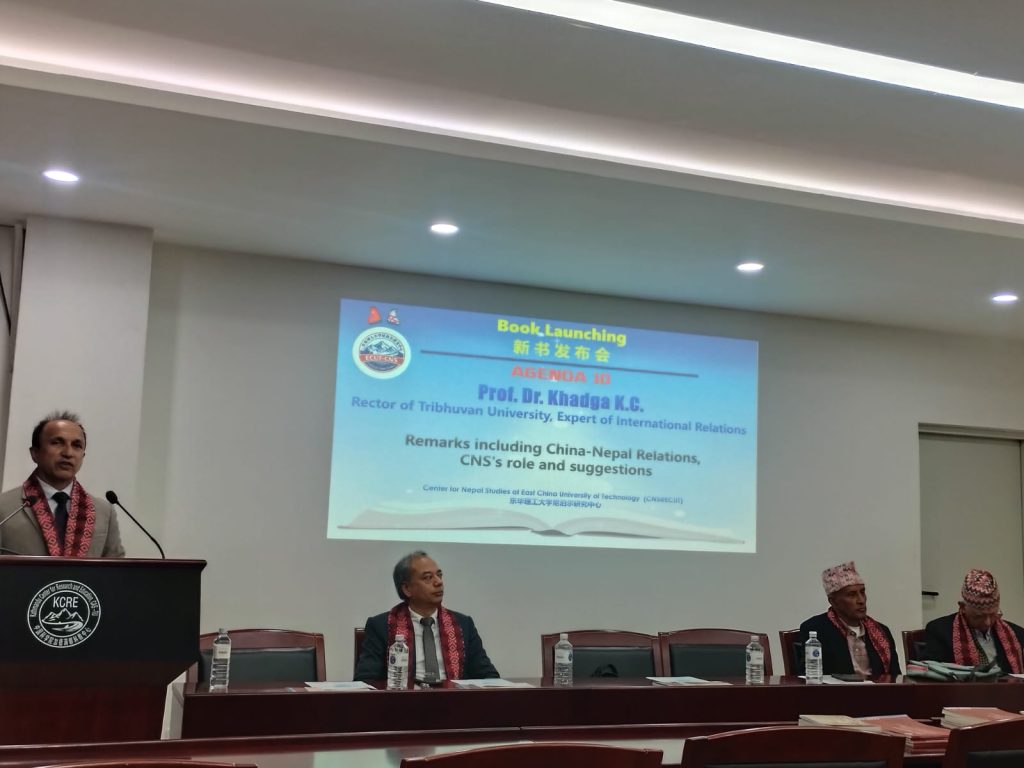
As a health professional, my daily life is rooted in the tangible—diagnosing illnesses, comforting patients, and studying the biological threads that connect human beings. We often say in medicine that understanding a patient’s cultural background is as vital as understanding their symptoms. However, during the Shiva Ratri holiday (15 February 2026), I was fortunate to attend a book launching ceremony organized by the Center for Nepal Studies (CNS), East China University of Technology (ECUT), at the Kathmandu Center for Research and Education in Kirtipur, Kathmandu. During the ceremony, I came across two recent publications from the CNS, The Peony Pavilion (an ancient Chinese folktale reimagined as a Chinese-English-Nepali-language picture book) and Friendship Across the Himalayas: A Visual Chronicle of 70 Years of China-Nepal Diplomatic Relations (a photo book). I was moved not just as a China enthusiast but as a caregiver and a citizen of Nepal.
When I went through them, I felt that these two volumes are not mere books; they are diagnostic tools for the soul of our cross-border relationship.
When I read the Nepali version of The Peony Pavilion, a 16th-century Chinese classic by Tang Xianzu, into an English-Nepali version, translated by Professor Liu Yueming and Dr. Saroj Gautam, I felt like it was similar to some Nepali folktale. In my work, I have seen how art and storytelling reduce anxiety and build trust—whether between a doctor and a child or between two nations. This book introduces Nepali children (and adults like me) to the profound Chinese concept of emotion/passion as a life force. The illustrations are lush, but the true magic is linguistic. Seeing this tale of love beyond death rendered in simple, elegant Nepali makes the unfamiliar suddenly intimate.
For our younger generation, who are more exposed to Western media than to our immediate neighbors’ rich heritage, this book is a critical academic resource. It teaches comparative literature, classical aesthetics, and the idea that human longing transcends the Himalayas. As a health professional, I see emotional resilience as a form of wellness. Stories like this teach young Nepalis that suffering and joy are universal—a lesson in compassion that no textbook on sociology can fully impart.
Similarly, the photo book is the perfect companion volume. Where the folktale gives us emotional imagination, this chronicle gives us historical evidence. In my field, we say “data saves lives.” Here, the data are photographs—of treaty signings, infrastructure projects, cultural exchanges, and the faces of ordinary people from both nations. The visual timeline of 70 years of China-Nepal diplomatic relations is stunningly curated.
For a Nepali reader, this book fills a glaring gap in our academic resources. Our curricula often mention China-Nepal relations in abstract political terms—border agreements, trade routes, aid. But we rarely see the human continuity. This photo book shows Nepali students the quiet dignity of cultural troupes performing in Beijing, the joint efforts after the 2015 earthquake, and the shared majesty of Everest. It transforms diplomatic history from a dry list of dates into a living, breathing family album.
Too often, academic resources from one country feel like a monologue. These books, published by the CNS, are a genuine dialogue. The Peony Pavilion adapts a Chinese classic for Nepali sensibilities, while the photo book shows Nepal as an equal partner, not just a recipient. Additionally, many Nepalis have limited exposure to Chinese society beyond development projects or tourism. The folktale reveals China’s poetic, romantic, and philosophical depth. The photo book reveals the shared struggles and celebrations—the mundane and magnificent moments that forge real friendship. Furthermore, for Nepali students of anthropology, international relations, and even art therapy (my growing field), these books are primary sources. They can study the translation choices in The Peony Pavilion to understand cross-cultural linguistics. They can analyze the photographic framing in the chronicle to understand diplomatic narratives. These are not disposable coffee table books; they are textbooks for the heart and the mind.
As a health professional, I see a clear prescription: to foster a healthy relationship between Nepal and China, we need more than official visits and economic corridors. We need shared stories and shared memories.
I thank the CNS at ECUT for publishing these two volumes. The Peony Pavilion is a gentle tonic for cultural curiosity. Friendship Across the Himalayas is a robust atlas of our collective journey. I urge every school library, every university department of humanities and social sciences, and every Nepali family who believes in raising globally mindful children to acquire these books. They will not just inform the next generation; they will heal the distance between two ancient neighbors.
The author is a medical professional in Nepal.